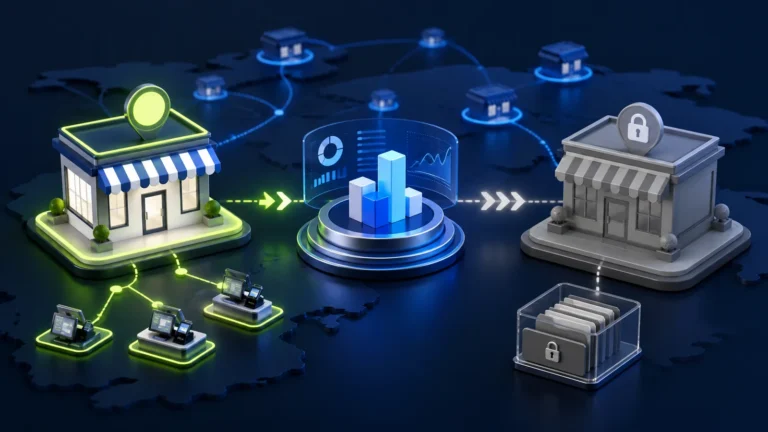

FBR Digital Invoicing and FBR POS integration are related, but they are not interchangeable. POS integration is commonly discussed in the context of real-time retail sales reporting by applicable Tier-1 retailers. Digital Invoicing is a broader structured-invoice workflow that can originate from an ERP, POS or invoicing system.
FBR Digital Invoicing vs POS integration: quick comparison
| Area | FBR POS integration | FBR Digital Invoicing |
|---|---|---|
| Typical context | Retail counter sales by businesses falling within applicable POS rules, commonly Tier-1 retailers | Structured electronic invoices created through an ERP, POS or invoicing system for applicable persons and transactions |
| Source system | Retail POS at an outlet or counter | ERP, accounting, POS, billing or invoicing software |
| Core workflow | Report applicable retail sales and receive the required FBR response | Prepare structured invoice data, validate it, transmit it and store the response |
| Important data | Outlet, item, quantity, tax, payment and invoice information | Seller, buyer, registration type, item or service, tax treatment, quantities, values and scenario fields |
| Best starting point | Confirm whether the business and outlet fall under current POS rules | Confirm registration, notification, activity, scenarios and current integration instructions |
What FBR's official guidance says
According to the FBR Digital Invoicing FAQs reviewed in August 2026, an electronic invoice is a structured digital invoice rather than a scan or image of a paper invoice. The FAQ describes mandatory electronic invoicing under S.R.O. 709 dated 22 April 2025 and provides integration guidance for corporate and non-corporate registered persons. It also explains that notified registered persons integrate their POS, ERP or invoicing systems through a licensed integrator and that PRAL can provide integration on request.
FBR also maintains separate Digital Invoicing legal provisions, technical documentation and a Digital Invoicing user manual. POS requirements have their own context, including FBR's POS legal provisions booklet.
What FBR POS integration usually means
FBR POS integration is normally associated with a retail sale recorded at a physical outlet. The POS captures the transaction, calculates configured taxes, sends applicable information and prints or stores the resulting invoice details. A usable implementation must do more than transmit a normal cash sale.
- Outlet identity: each integrated location, counter and device must be mapped correctly.
- Item setup: descriptions, units, prices, discounts and tax treatment must match real products.
- Payment handling: cash, card, mixed payments and other methods should reconcile with closing totals.
- Returns: software should preserve a traceable relationship to the original transaction where required.
- Connectivity: interruptions need a documented operational process; staff should not invent workarounds.
- Daily controls: management should compare POS sales, payments, stock movement and transmitted records.
A retailer should test the complete counter workflow before go-live: product search, barcode scanning, discounts, tax calculation, payment, invoice response, reprint, cancellation permissions, returns, shift closing and branch reporting.
What FBR Digital Invoicing changes
Digital Invoicing moves the focus from a printed invoice to reliable structured data. Software must assemble required fields consistently, send them in the expected format, interpret the response and keep enough history for correction and audit.
This makes master-data quality critical. A weak product record, incorrect buyer registration type, missing unit, wrong tax treatment or unsupported scenario can stop an invoice even when the screen looks complete. Review:
- seller registration and branch information;
- buyer type, CNIC or NTN handling and required identifiers;
- products, services, descriptions, units and classification fields;
- rates, values, discounts and tax calculations;
- business scenarios relevant to the activity;
- returns, credit notes, debit notes and reference-document flows;
- user roles, approvals and error-correction ownership.
Our practical guides to buyer CNIC, NTN and registration type and Digital Invoicing scenarios SN001–SN028 explain two common preparation areas.
Which one applies to your business?
- Verify registration: confirm the seller's STRN, legal entity and branch records.
- Check current applicability: review FBR notifications, category and current requirements.
- Map transaction types: separate retail counter sales, B2B invoices, services, exports, returns and adjustments.
- Identify the source system: determine whether invoices begin in POS, ERP, accounting software, e-commerce or a manual process.
- Confirm required fields: document data coming from seller, buyer, item master, transaction and tax configuration.
- Test official scenarios: use the correct environment and cases before production.
A company can have more than one need. A multi-branch business may need retail POS controls at counters and structured invoicing from its ERP. The architecture should avoid duplicate entry and inconsistent numbering.
A practical implementation plan
1. Document the current invoice workflow
Record who creates an invoice, which data they use, who approves it, how tax is calculated, how stock or accounts update and how corrections happen.
2. Clean master data
Standardise products, services, units, buyer records, addresses, registration types and tax configuration. Assign one business owner to approve the dataset.
3. Configure roles and controls
Cashiers, sales staff, accountants and administrators should not share one login. Define who may change prices, override discounts, edit buyer data, cancel transactions, issue returns and retry rejected invoices.
4. Integrate in the correct environment
Use current FBR documentation and the applicable integration route. Store request and response references securely without exposing credentials or taxpayer information in ordinary reports.
5. Test normal and exception cases
Include missing buyer information, invalid registration type, incorrect item data, rounding, discounts, connectivity failure, duplicate submission, returns and adjustment flows.
6. Train users with written procedures
Staff need a short decision guide: what to check first, which errors they may correct, when to involve accounts, and who can contact the software or tax team. Use our common validation errors guide.
7. Monitor after go-live
Review accepted, rejected, retried and cancelled transactions daily. Compare invoices with sales, stock, receivables and general-ledger entries.
Common implementation mistakes
- Buying before confirming scope: a generic “FBR-ready” statement does not prove suitability.
- Testing only one invoice: returns, adjustments, buyer types and branches reveal gaps.
- Ignoring master data: integration cannot repair inconsistent products, buyers or tax settings.
- No error owner: rejected invoices remain unresolved when responsibility is unclear.
- Manual duplicate entry: repeated entry increases mismatches.
- No reconciliation: accepted responses must still match invoice totals, stock and accounts.
Software readiness checklist
| Check | Evidence to request |
|---|---|
| Current integration method | Technical workflow, responsible integrator and environment |
| Data mapping | Field-level mapping for seller, buyer, item, tax and transaction |
| Error handling | Readable message, correction workflow and retry history |
| Returns and adjustments | Live demonstration using a realistic original invoice |
| Security | Roles, audit logs, credential protection, backups and access revocation |
| Reconciliation | Reports matching transmitted invoices to sales, stock and accounts |
| Support | Named responsibility, response process and change management |
Frequently asked questions
Is a PDF invoice an electronic invoice?
Not by itself. FBR's FAQ describes an electronic invoice as structured digital data rather than a scanned or image-based copy.
Is FBR POS integration the same as Digital Invoicing?
No. They may share technology and data, but their context, affected workflows and requirements should be assessed separately.
Can an ERP or POS send Digital Invoices?
FBR guidance refers to integration of POS, ERP or invoicing systems through the applicable route. The system still needs correct mapping, validation, security and testing.
How long does implementation take?
It depends on data quality, branches, transaction types, current software and approval speed. Complex ERP and multi-branch environments require more mapping and testing.
Where should a business start?
Start with current applicability, a transaction map and master-data review—not software purchase alone.
Prepare the right FBR invoicing workflow
NexZion can review your invoice process, software, data and readiness without exposing client information. Explore our FBR Digital Invoicing software approach or request a focused demonstration.
Reviewed: August 2026. This article is general educational information. Always confirm current legal and technical requirements with FBR and a qualified tax adviser.
NexZion Solutions publishes practical guides based on business-software, compliance-workflow, website and automation implementation experience in Pakistan.