
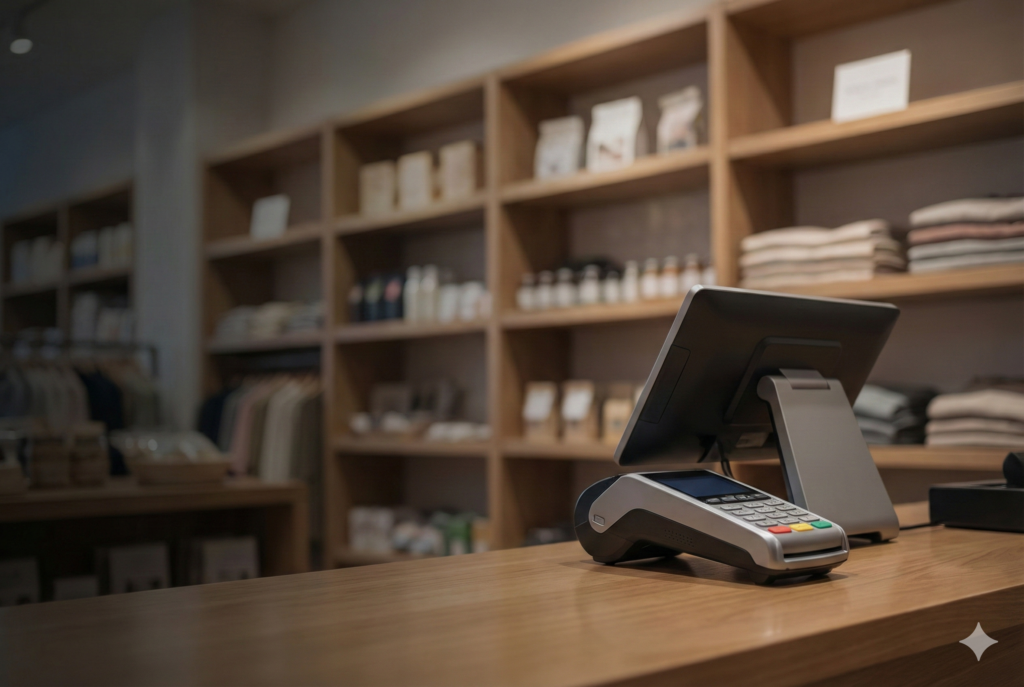
Before installing POS software, decide who owns products and prices, clean the item list, define cashier and manager permissions, document returns and discounts, test real transactions, train each role separately and plan the first daily closing before the system goes live.
Start with the work, not the screen
Many teams begin implementation by asking where each button is. A better starting point is to describe what happens from the moment a customer reaches the counter until cash, card, stock and the receipt are recorded.
The software should support that process without creating unnecessary steps. At the same time, the business may need to correct informal habits that cause stock differences or cash disputes.
Choose a project owner inside the business
The software provider can configure and train, but someone inside the business must make decisions. This person should understand daily operations and have authority to confirm products, prices, permissions and procedures.
Without an internal owner, every question moves between the cashier, accountant, store manager and business owner. Small decisions remain pending and the launch becomes slower than necessary.
Clean the product list before import
Product data is the foundation of a POS system. Duplicate names, unclear units and inconsistent prices will create confusion at the counter and unreliable reports.
Prepare a controlled list containing:
- Product name and category
- Barcode or internal code
- Purchase and selling unit
- Cost and selling price
- Applicable tax or rate treatment
- Opening quantity by location
- Minimum stock level where needed
- Variants such as size or colour
For products sold in kilograms, grams, litres, boxes, cartons or pieces, confirm the conversion rule before transactions begin. The same item should not be created several times simply because it is sold in different pack sizes.
Define staff roles clearly
Every employee should have an individual login. Shared passwords make it difficult to investigate cash differences, discounts or voided invoices.
A simple role plan may include:
- Cashier: create sales, receive allowed payment methods and print receipts.
- Supervisor: approve returns, controlled discounts and invoice cancellation.
- Storekeeper: receive stock, transfer items and record approved adjustments.
- Accountant: review cash, expenses, customer balances and supplier payments.
- Owner or manager: view consolidated reports and control sensitive settings.
Permissions should match responsibility. A cashier usually does not need access to purchase cost, profit reports or old transaction editing.
Write the rules for exceptions
Normal sales are easy to demonstrate. Problems usually appear around exceptions: a customer returns an item, a barcode is missing, a price changes during the day or the cash drawer does not match.
Before launch, agree on the procedure for:
- Returns and exchanges
- Damaged or expired items
- Discount approval
- Credit sales and customer limits
- Price overrides
- Cancelled or held bills
- Power, internet or printer failure
- Cash shortage or excess at closing
When these rules are unclear, staff invent a different solution each time.
Test with real business examples
A generic demo can show that the system opens and prints. It does not prove that your operation is ready.
Use a test list that reflects daily work: a normal cash sale, card payment, discount, return, credit customer, low-stock item, multiple quantities, different pack units and a cashier closing. Where FBR or provincial integration applies, also test the submission status and the response shown to staff.
Train people according to their role
A single crowded training session is rarely effective. Cashiers need speed and confidence. Store staff need accurate receiving and transfers. Managers need control and reports.
Use short sessions with practice:
- Explain the purpose of the new process.
- Demonstrate one complete transaction slowly.
- Let the employee perform it without assistance.
- Introduce common mistakes and show the correction method.
- Repeat the closing or handover procedure.
Training should use the actual products, receipt format and payment methods of the business.
Plan the first opening stock carefully
Opening stock is not just a number imported into the system. It becomes the starting point for future stock reports and profit calculations.
Choose a cut-off time, count the stock, record differences and approve the final opening figures. Avoid continuing sales in an old register while the same stock is being imported into the new system without a clear adjustment process.
Rehearse cashier closing before launch
The first daily closing should not be discovered at the end of the first live day. Test how the cashier declares cash, how card or bank payments are compared, who approves a difference and which report the manager receives.
A good closing process connects the software total with physical cash and explains any difference instead of silently editing it.
Use a controlled launch
For a busy operation, launching every counter or branch at the same moment may create unnecessary pressure. A controlled pilot allows the team to correct product search, receipt layout, permissions and training gaps before wider rollout.
Keep support contacts clear during the first days. Staff should know which questions belong to their supervisor and which require the software team.
Do not measure success only by installation
A POS project is successful when billing is faster, stock movements are recorded, cash closes clearly and management can trust the reports. The installation date is only the beginning.
Prepare your POS launch with a practical implementation plan
NexZion Solutions provides POS software, inventory workflows, staff permissions, reporting and tax-ready integrations based on the needs of the business.
Explore POS Software · View the POS demo · Request a free demo
NexZion Solutions publishes practical guides based on business-software, compliance-workflow, website and automation implementation experience in Pakistan.