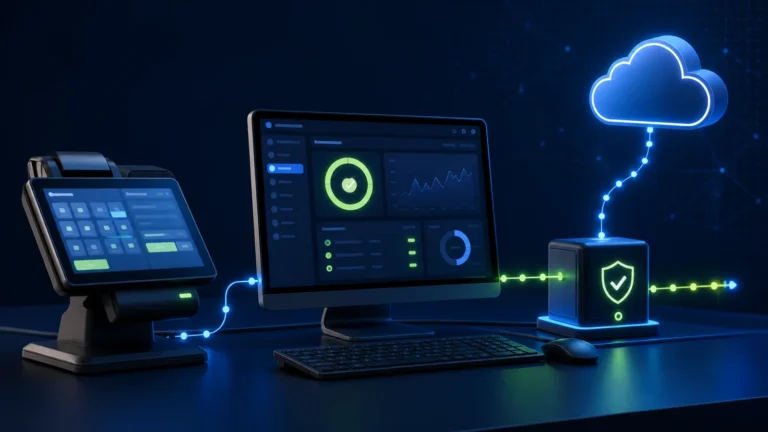

A practical integration creates or updates a CRM lead from an approved WhatsApp conversation, stores essential customer details, assigns a responsible person, records the latest status, schedules follow-up and gives staff enough context to continue the conversation.
Why WhatsApp alone is not a CRM
A chat application can show messages, but management also needs to know which service the customer wants, who owns the lead, what was promised, when follow-up is due and why the opportunity was won or lost.
Without a CRM or structured lead register, businesses often face duplicate replies, forgotten quotations, lost customer context and weak campaign reporting.
Define the source of truth
Decide which system owns each record. The CRM may own lead status, assignments and next actions. WhatsApp remains the communication channel. Product, price, stock or account information may come from ERP, POS or another approved system.
Clear ownership prevents different systems from showing conflicting information.
Information worth sending to the CRM
- Customer name and phone number
- Business or organization
- City or service area
- Requested service or product
- Lead source and campaign
- Conversation summary
- Assigned employee
- Priority and status
- Next follow-up date
- Consent or communication preference where relevant
Do not copy every message into every field. Store the information staff need for the next business action.
New lead versus existing customer
The workflow should search for an existing record before creating a new lead. The same phone number may belong to a current customer asking for support, a previously lost opportunity or an active sales lead.
Duplicate prevention is important because repeated customer records create inaccurate reporting and disconnected follow-up.
Lead assignment rules
Leads can be assigned by service, location, existing relationship, branch, campaign or workload. Keep the rules simple enough for management to understand and override when necessary.
Each lead should have one accountable owner even when technical or management staff support the discussion.
Conversation summaries
AI or rule-based tools can prepare a concise summary containing the customer’s requirement, important details, unanswered questions and expected next action. Staff should be able to review or correct the summary.
A summary is more useful than copying a long chat without structure.
Follow-up automation
When a demo, quotation or callback is promised, the CRM should create a task and due date. Reminders can be sent to the responsible person, with escalation when the task remains overdue.
Customer-facing follow-up should remain relevant to the actual conversation and stop when the customer declines or opts out.
Status design
Use a small, meaningful set of statuses such as New, Contacted, Qualified, Demo Scheduled, Proposal Sent, Follow-Up Due, Won, Lost and Paused. Too many statuses make reporting inconsistent.
Define what action moves a lead from one status to another.
Human handover and team inbox
When a person takes over, they should see the collected details, recent summary and any promised action. The customer should not have to repeat the full story.
Permissions should determine which employees can see conversations, customer records, prices or sensitive notes.
Reporting created by the integration
- Enquiries by source and service
- Response and assignment time
- Qualified lead rate
- Follow-ups due and overdue
- Demo and proposal volume
- Won and lost outcomes
- Common customer questions
- Opt-outs, complaints and escalation cases
Reports are dependable only when staff update outcomes consistently.
Security and privacy
Use approved access, limit permissions and avoid placing secrets in public code or ordinary documents. Collect only necessary customer information and define how long conversation summaries and lead records are retained.
Sensitive account, medical, legal or financial matters may require a more secure channel and human verification.
Integration failure handling
The workflow should log failed requests, prevent duplicate records and notify a responsible person. A customer message should not disappear simply because the CRM or another system is temporarily unavailable.
Implementation checklist
- Map the current sales and support process.
- Choose the CRM record structure.
- Define new-lead and existing-customer rules.
- Confirm assignment, status and follow-up rules.
- Decide what information moves between systems.
- Set permissions and human handover.
- Test duplicates, missing data and service interruptions.
- Train staff and review reports after launch.
How NexZion Solutions can help
NexZion Solutions provides WhatsApp automation, business automation services and software integration planning for Pakistani businesses. We review your current lead process, CRM or software access and staff responsibilities before recommending the connection.
Frequently asked questions
Do we need a large CRM?
No. The right system depends on lead volume, users, sales stages, reporting and integrations. A smaller controlled lead register may be enough for an early phase.
Can old WhatsApp contacts be imported?
Import may be possible, but the business should first clean duplicates, confirm consent and decide which records are still useful.
Can the integration create reminders?
Yes. It can create tasks and reminders based on approved sales stages or promised actions.
Can it connect with ERP or POS?
Possibly, where APIs, permissions and dependable data are available. The exact feasibility must be reviewed.
Share your current lead sources, CRM, users and follow-up process for a practical integration assessment.
NexZion Solutions publishes practical guides based on business-software, compliance-workflow, website and automation implementation experience in Pakistan.